
15 DIY Stairs Outdoor Ideas for 2026
DIY Stairs Outdoor Ideas for 2026 are becoming more popular as homeowners look for affordable ways to improve curb appeal and outdoor functionality. Outdoor stairs do much more than connect different levels of a yard. They help create a safer entrance, improve accessibility, and add character to a home’s exterior.
Based on industry reports, well-designed outdoor improvements can increase property value by 10% to 20%. A thoughtfully planned staircase can also improve first impressions while making everyday movement around the property easier. Whether the goal is a modern entrance, a rustic pathway, or a low-maintenance solution, there is an outdoor stair design for every budget and style.
Quick Summary
This guide covers 15 practical DIY outdoor stair ideas designed for different home styles and landscapes. From classic wooden steps and brick staircases to modern floating designs and illuminated pathways, each idea focuses on appearance, durability, and usability. The article also includes planning tips, material recommendations, maintenance advice, and safety considerations to help avoid costly mistakes and build stairs that last for years.
Key Takeaways
- Outdoor stairs can improve curb appeal and property value.
- Proper measurements are essential for safety and comfort.
- Concrete offers the longest lifespan with minimal maintenance.
- Wood remains one of the most budget-friendly DIY materials.
- Lighting can significantly improve stair visibility at night.
- Symmetrical designs create a cleaner and more organized look.
- DIY construction can reduce project costs by up to 50%.
- Regular maintenance extends stair lifespan and performance.
Planning The DIY Stair Project
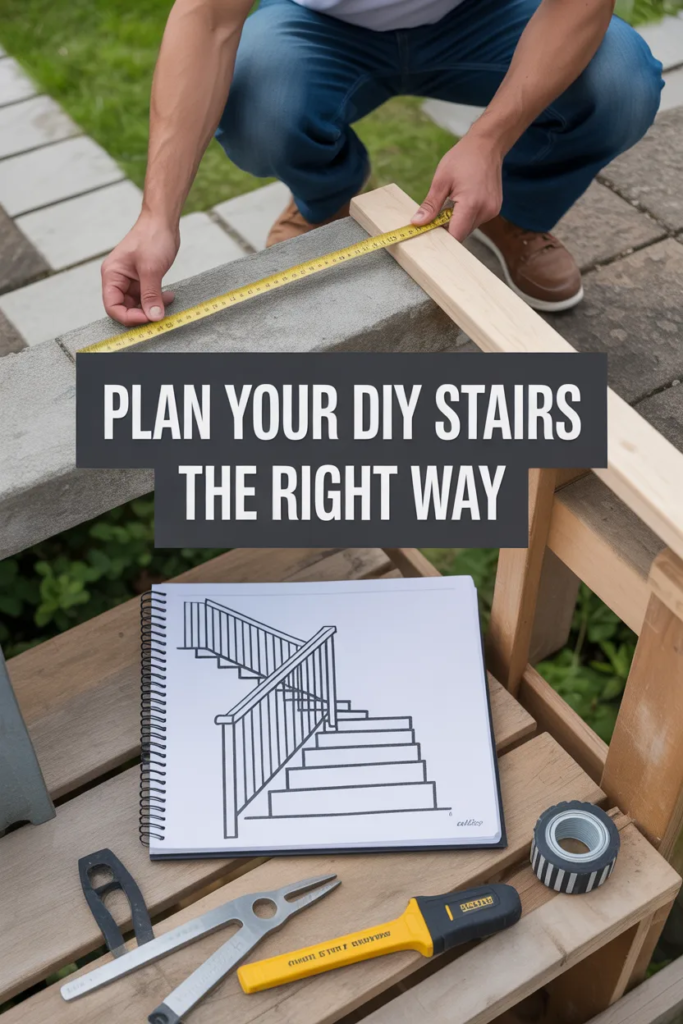
Every successful stair project starts with proper planning. Before buying materials, I focus on measuring the total rise and available space. Accurate measurements help prevent uneven steps, which can become both a safety hazard and a costly repair later.
The next step is selecting materials that match the climate, budget, and maintenance expectations. In many projects, pressure-treated wood offers affordability, while concrete provides excellent durability and weather resistance. Composite materials are also becoming a popular low-maintenance choice in 2026.
A good rule I follow is keeping riser heights between 6 and 7 inches and tread depths around 10 to 12 inches. These dimensions create a comfortable walking experience and align with common building standards.
Pro Tip: Draw a simple sketch before construction begins. Visual planning helps identify spacing issues and prevents unnecessary material waste.
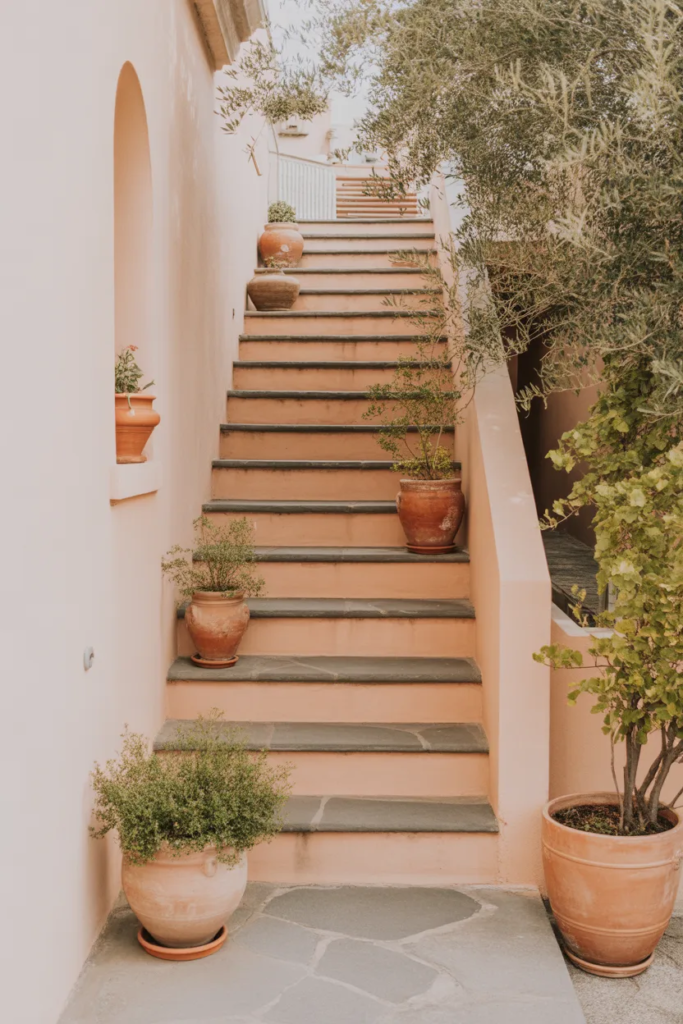
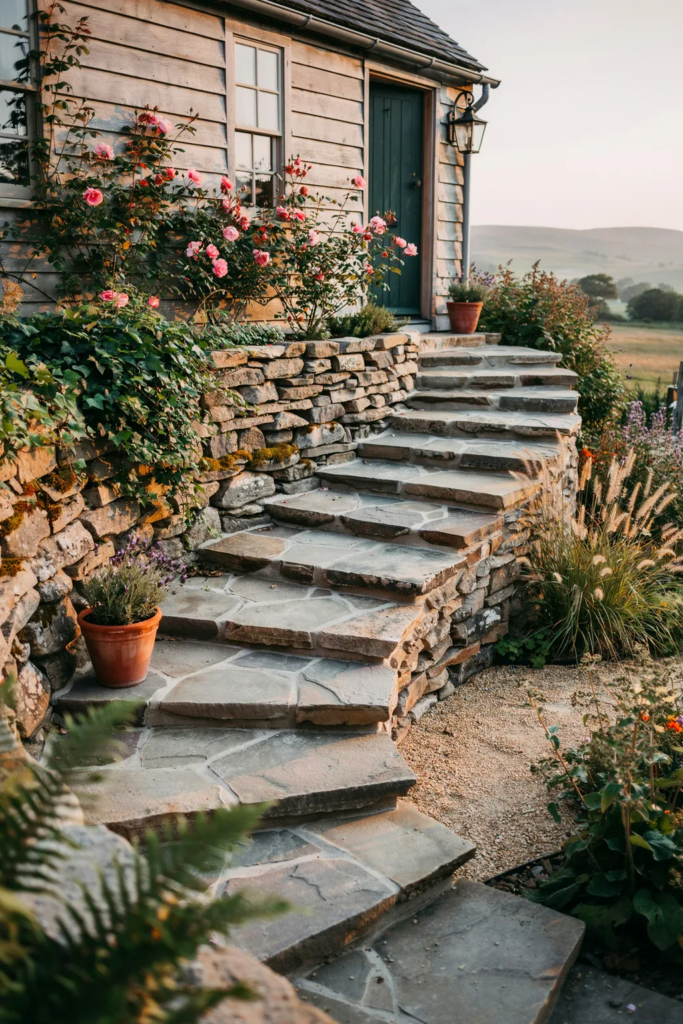
1. Mediterranean Entry
Mediterranean-inspired stairs bring warmth and timeless character to an entrance. Natural stone paired with terracotta planters creates a welcoming appearance that blends well with outdoor landscapes.
I find this design works especially well in sunny climates where earthy colors complement the surroundings. Adding climbing plants nearby can further enhance the visual appeal while softening hard surfaces.
Pro Tip: Use natural stone sealant to protect surfaces from moisture and staining.
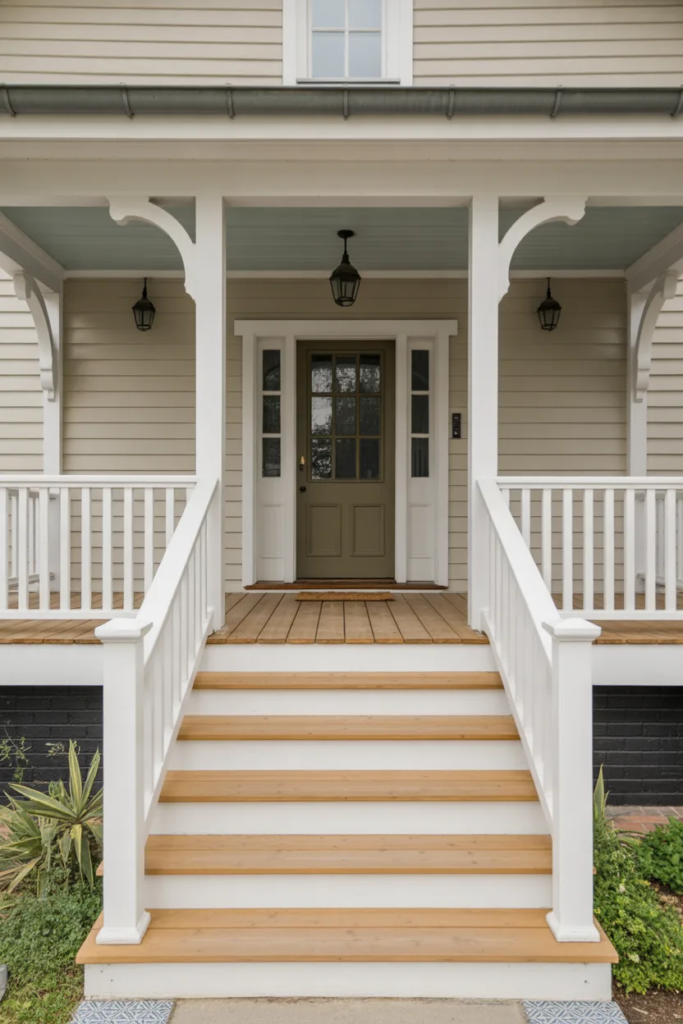
2. Classic White Rail
A staircase with white railings and wooden steps remains one of the most reliable outdoor designs. The combination creates a bright, clean appearance that complements nearly any home style.
One advantage of this design is its ability to make smaller entrances feel more open. White railings reflect natural light, helping create a larger visual impression.
Pro Tip: Choose weather-resistant exterior paint to reduce future maintenance.
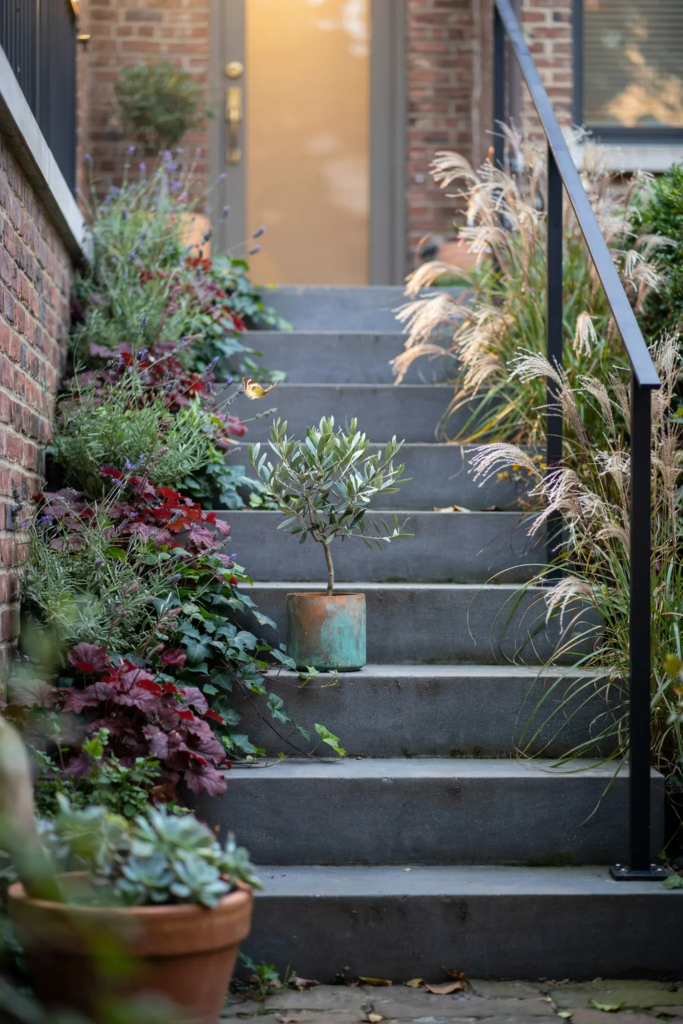
3. Urban Garden Steps
Urban garden stairs combine modern design with greenery. Dark-colored steps surrounded by plants create strong visual contrast while maximizing limited outdoor space.
This design works particularly well for townhouses and compact front yards. Strategic planting can add privacy without making the area feel crowded.
Pro Tip: Select native plants that require less watering and maintenance.
4. Southern Charm Stairs
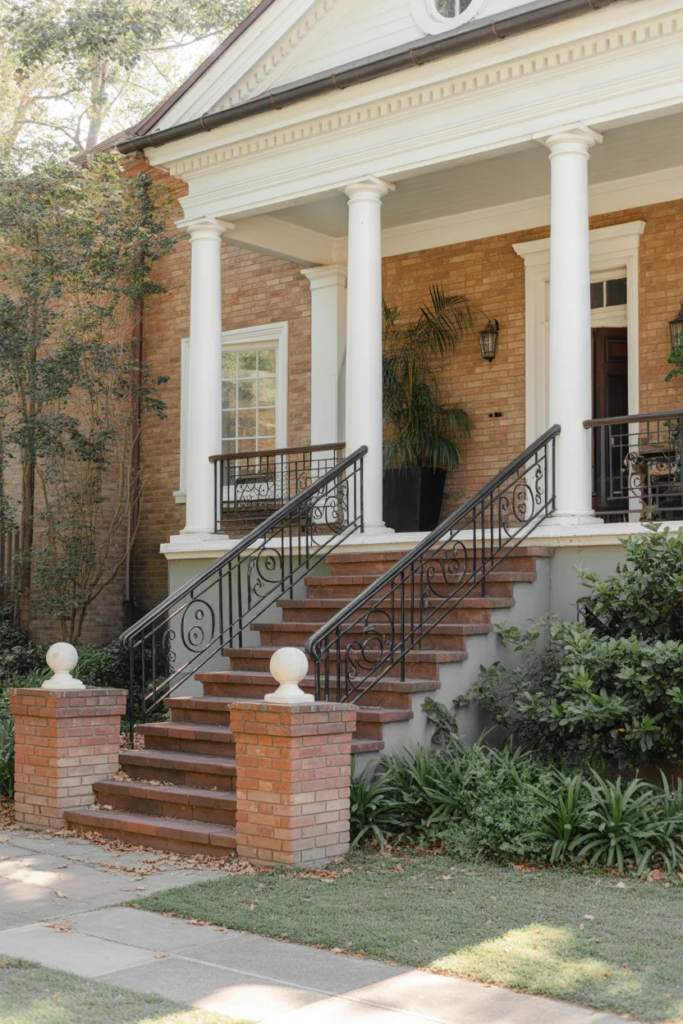
Brick stairs continue to be one of the most dependable outdoor stair solutions. Their classic appearance blends naturally with traditional and farmhouse-style homes.
Many brick staircases remain structurally sound for decades when properly installed. Pairing them with simple landscaping creates a welcoming and timeless entrance.
Pro Tip: Use high-quality mortar designed for outdoor weather conditions.
5. Mosaic Pop
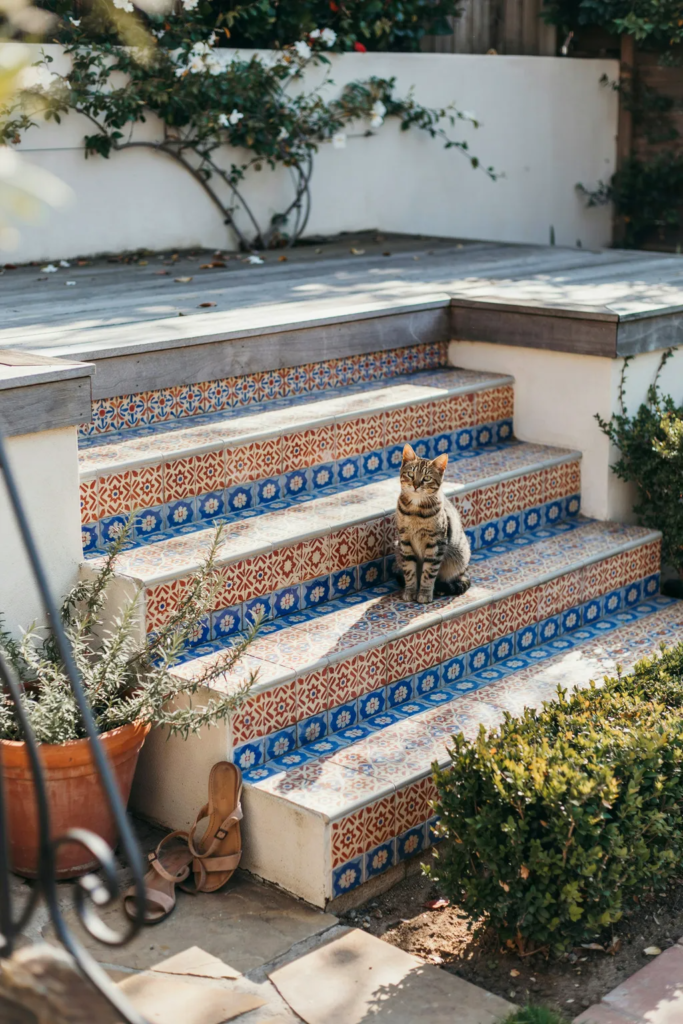
Mosaic tile stairs instantly become a focal point of any outdoor space. Decorative patterns allow homeowners to add personality and color without extensive structural changes.
I recommend choosing frost-resistant and weatherproof tiles to maintain appearance throughout changing seasons. Quality materials help prevent cracking and fading over time.
Pro Tip: Seal grout lines regularly to extend tile life.
6. Bold Contrast
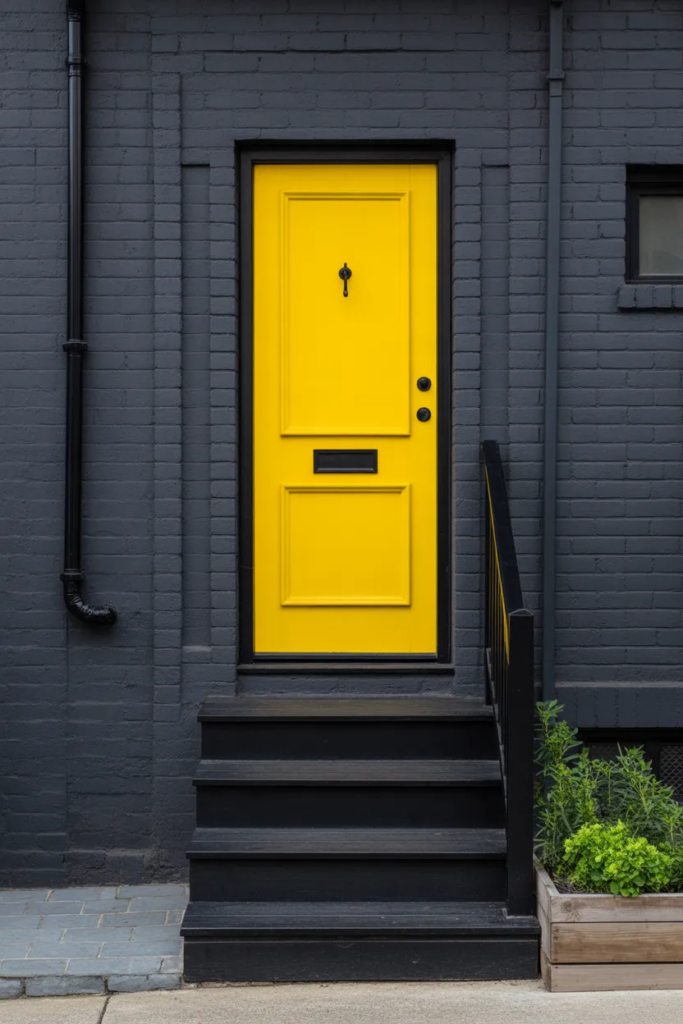
A bold contrast design relies on color rather than complicated construction. Dark stairs paired with a bright front door create a striking visual effect with minimal investment.
This approach works well for homeowners seeking a noticeable upgrade without undertaking a major renovation project.
Pro Tip: Choose complementary colors that match the overall exterior palette.
7. Rustic Porch Charm
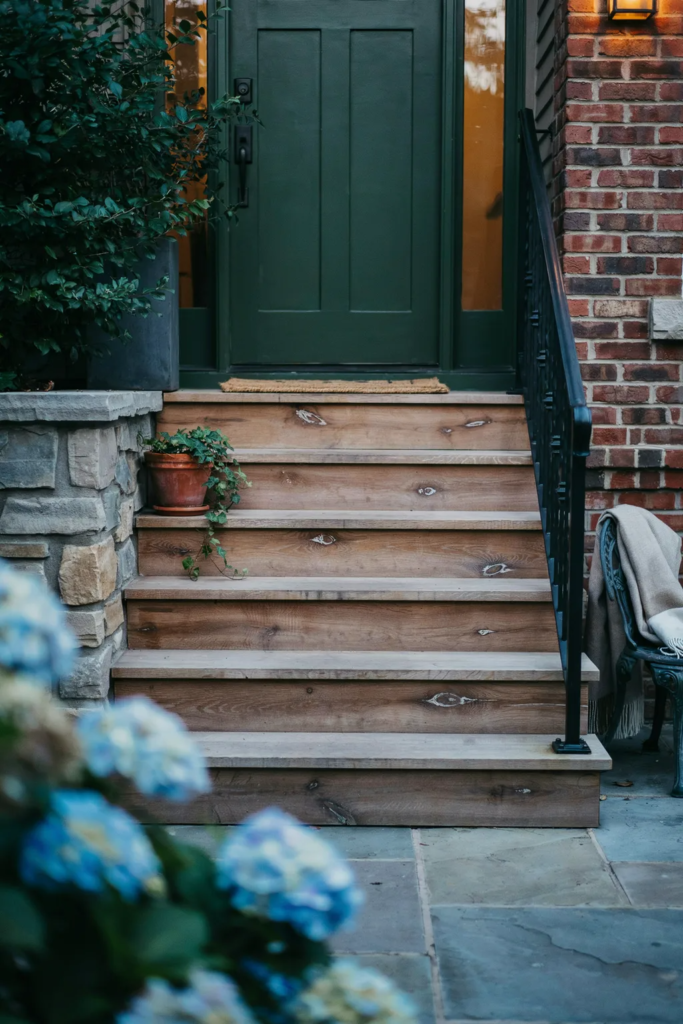
Rustic wooden stairs offer a natural and inviting appearance. Combining wood with brick, stone, or metal accents adds texture and depth to the overall design.
This style creates a comfortable atmosphere that feels especially welcoming during evenings when paired with warm outdoor lighting.
Pro Tip: Apply a waterproof wood sealant every few years to prevent moisture damage.
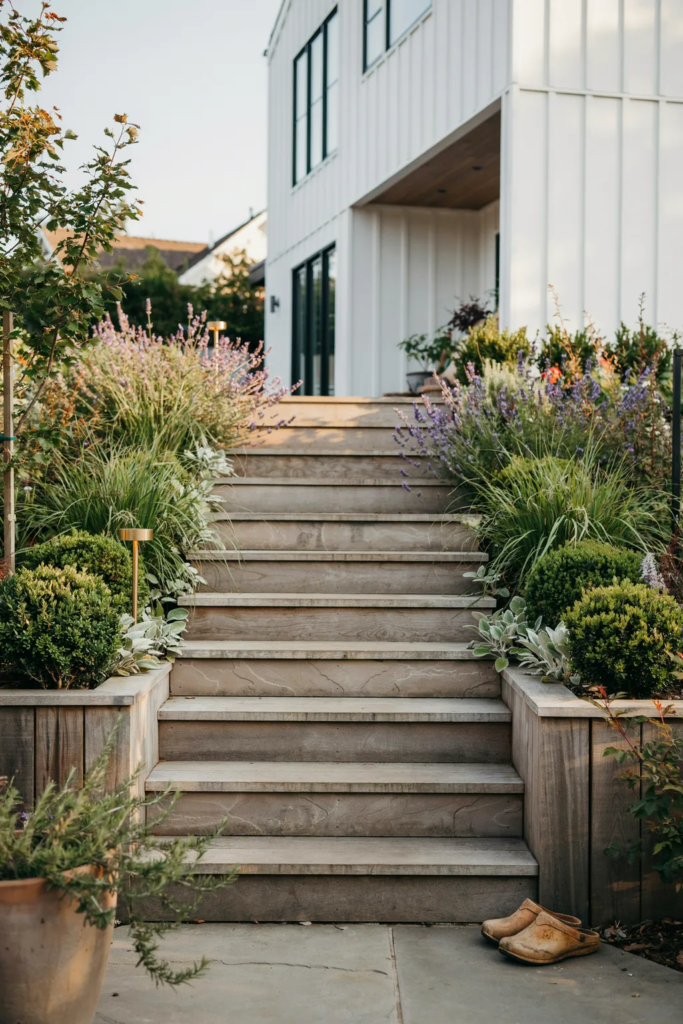
8. Garden Framed Steps
Garden-framed stairs create a seamless transition between landscaping and architecture. Plants lining both sides of the staircase add softness and visual balance.
Research shows that well-designed green spaces can contribute to stress reduction and improve outdoor enjoyment. This design naturally supports that goal.
Pro Tip: Use low-maintenance shrubs and perennials for year-round appeal.
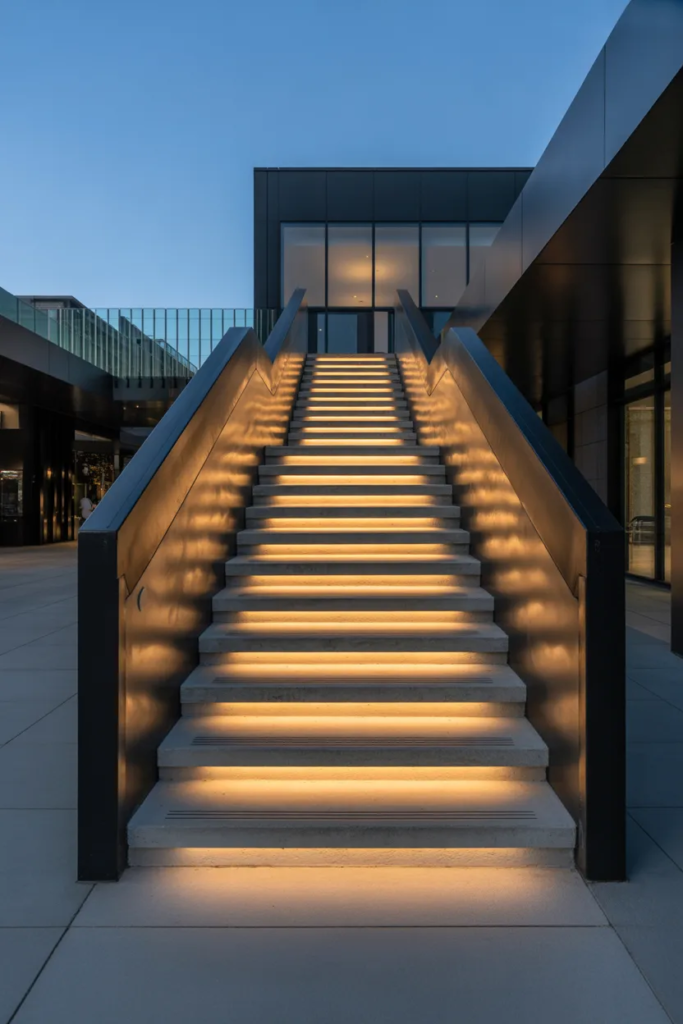
9. Lit Minimalism
Modern outdoor stair lighting serves both functional and decorative purposes. LED lighting improves visibility while adding a sophisticated appearance after sunset.
Safety experts often recommend adequate stair lighting because poor visibility contributes to many outdoor falls and accidents each year.
Pro Tip: Solar-powered LED lights can reduce electricity costs and simplify installation.
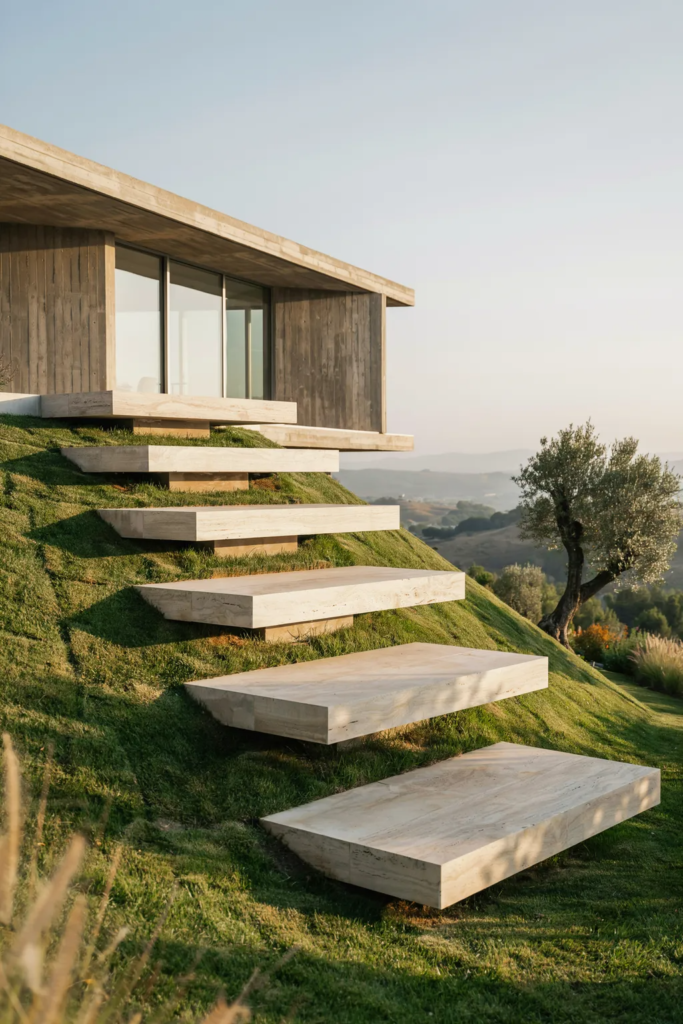
10. Floating Steps
Floating steps create a clean architectural look that feels modern and upscale. Large stone slabs or concrete platforms appear suspended, creating a minimalist effect.
This design is particularly effective for contemporary homes where simplicity and open space are key design elements.
Pro Tip: Ensure a strong foundation and proper weight distribution during installation.
11. Cottage Curve
Curved staircases add movement and elegance to an outdoor entrance. Unlike straight stairs, they create a softer visual flow that naturally draws attention.
Although construction can be more complex, the finished result often becomes one of the property’s standout features.
Pro Tip: Mark curves carefully before excavation to maintain symmetry.
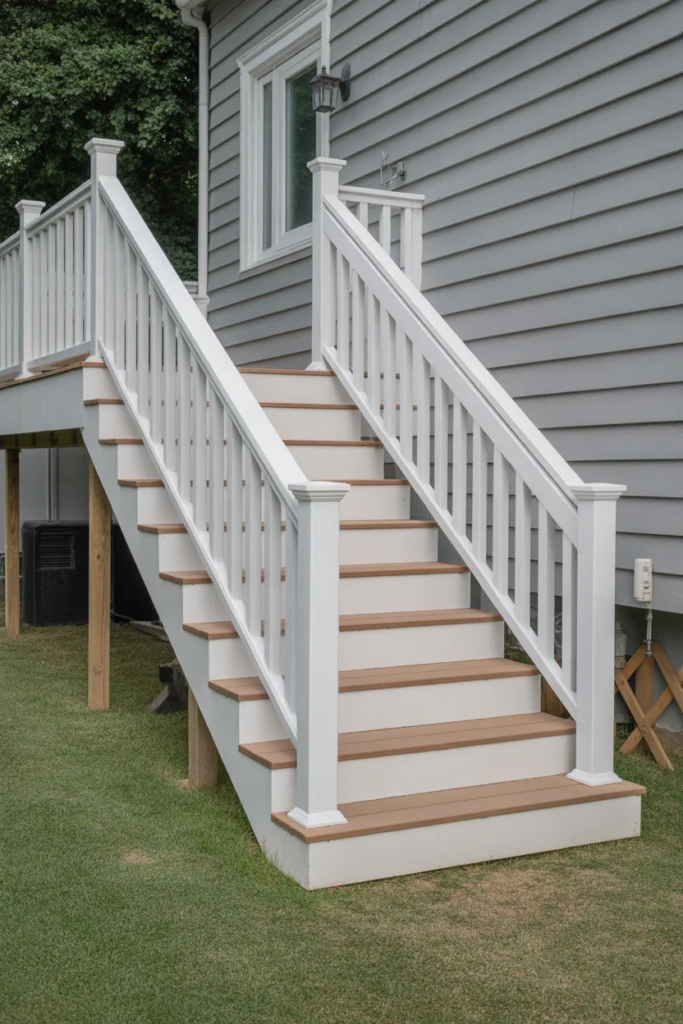
12. Compact Chic
Small spaces can still have attractive outdoor stairs. Composite decking materials offer durability while maximizing limited square footage.
This solution works well for side entrances, small patios, and compact backyard access points.
Pro Tip: Composite materials resist rot, insects, and moisture better than many traditional woods.
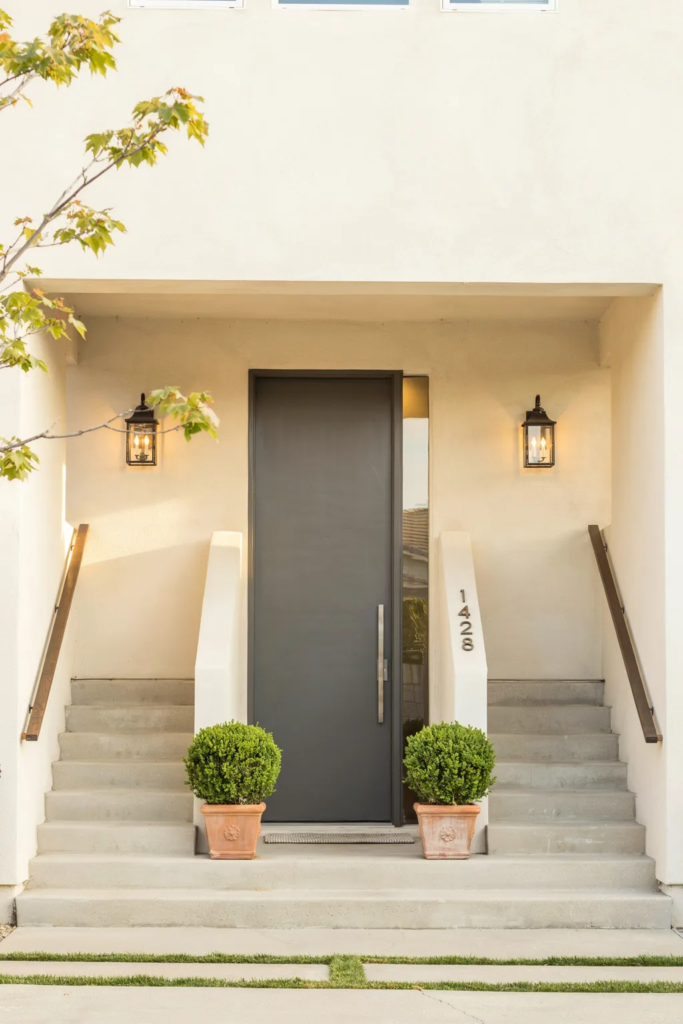
13. Refined Symmetry
Symmetrical staircases create a balanced and organized appearance. Matching elements on both sides establish visual harmony and improve curb appeal.
Simple additions such as matching planters or lighting fixtures can enhance the overall presentation without overwhelming the design.
Pro Tip: Measure both sides carefully throughout construction to maintain balance.
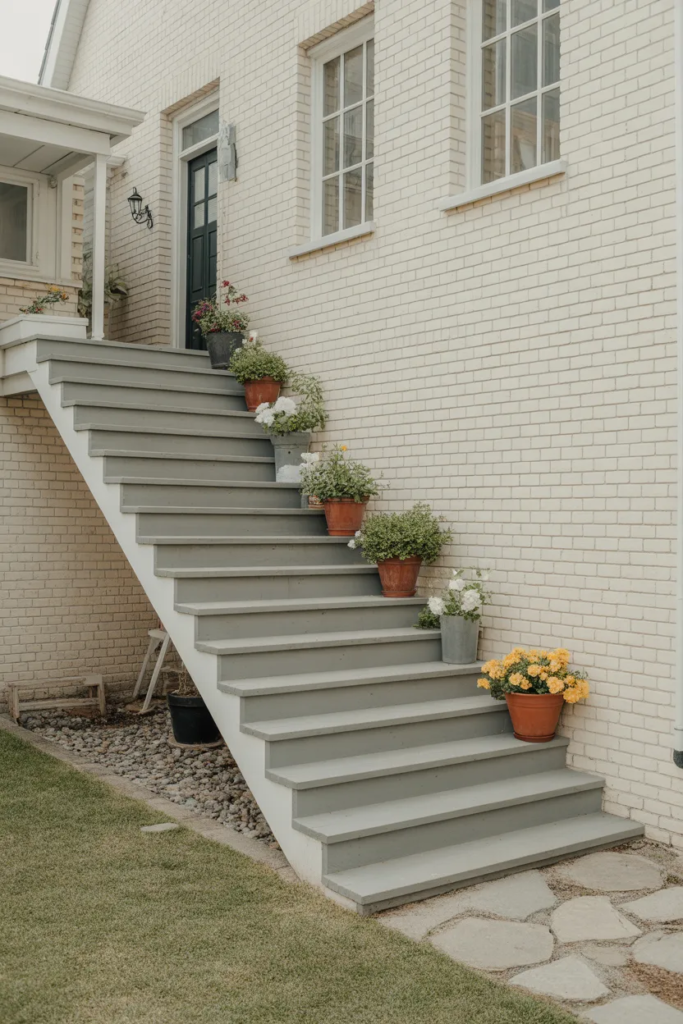
14. Classic Cottage
Classic cottage stairs focus on simplicity and charm. Light-colored stone steps paired with straightforward railings create a welcoming entrance suitable for many home styles.
Seasonal flowers and decorative containers can add color while maintaining the relaxed cottage aesthetic.
Pro Tip: Use flowering plants that bloom at different times of the year for continuous color.
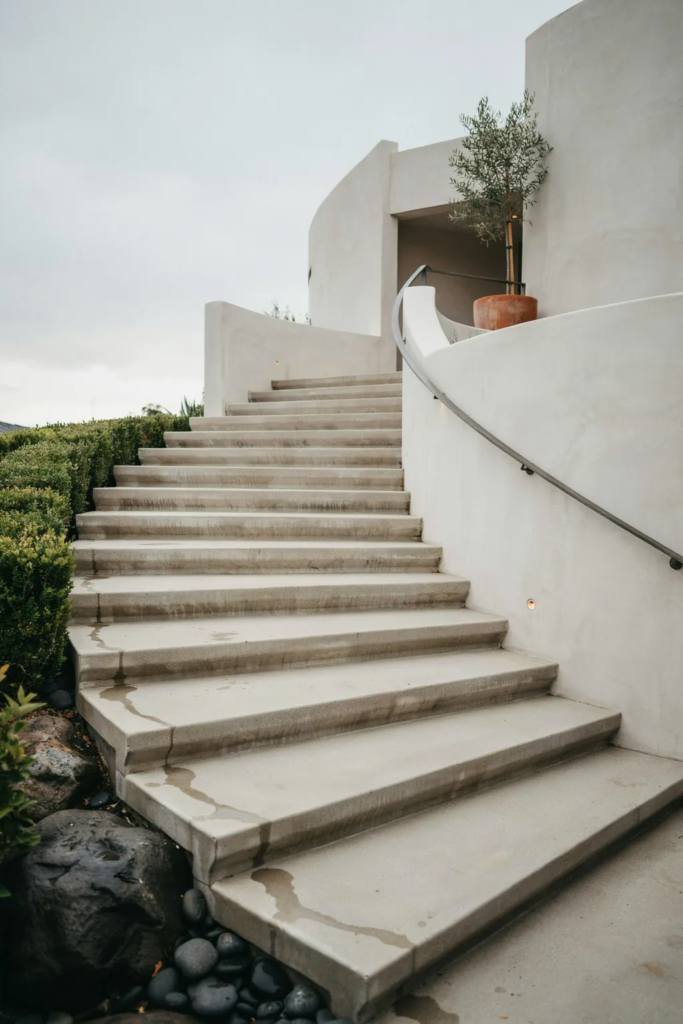
15. Sculpted Concrete
Concrete stairs remain one of the strongest long-term investments for outdoor spaces. Modern finishing techniques allow smooth curves and custom shapes that look both elegant and durable.
Properly installed concrete stairs often last 20 years or more with minimal maintenance, making them a practical option for many homeowners.
Pro Tip: Add a textured finish to improve traction during wet weather.
Final Thoughts
Outdoor stair projects offer one of the best opportunities to improve both appearance and functionality without spending a fortune. The right design can enhance safety, increase property value, and create a more welcoming outdoor environment.
Success depends on careful planning, accurate measurements, and selecting materials that fit the local climate and maintenance expectations. Whether choosing rustic wood, timeless brick, or modern floating steps, a well-built staircase can provide years of reliable use while transforming the overall look of a home.
FAQs
What is the best material for outdoor DIY stairs?
Concrete and pressure-treated wood remain the most popular choices. Concrete offers exceptional durability, while pressure-treated wood provides a more affordable and beginner-friendly option. Composite decking is another excellent low-maintenance alternative.
How much does it cost to build DIY outdoor stairs?
Most DIY outdoor stair projects cost between $200 and $1,500 depending on size, materials, and design complexity. Building the stairs yourself can often save 40% to 60% compared to hiring contractors.
What is the standard height for outdoor stair steps?
A typical outdoor stair riser measures between 6 and 7 inches, while tread depth usually ranges from 10 to 12 inches. These dimensions create comfortable and safe walking conditions.
Do I need permission to build outdoor stairs?
Permit requirements vary by location. Small stair projects may not require approval, but larger structures often need permits and inspections. Always check local building regulations before starting.
How can outdoor stairs be made safer?
Adding non-slip surfaces, sturdy handrails, and proper lighting significantly improves stair safety. Textured materials and LED lighting are particularly effective in wet or dark conditions.
What is the easiest DIY outdoor stair design?
Basic box-style wooden stairs are generally the easiest for beginners. They require simple tools, straightforward measurements, and readily available materials.
How long do DIY outdoor stairs last?
Lifespan depends on materials and maintenance. Wood stairs typically last 10 to 15 years with proper care, while concrete stairs can last 20 years or longer.
Can outdoor stairs be built without professional help?
Many homeowners successfully build outdoor stairs themselves. Following accurate measurements, safety guidelines, and local building codes greatly increases the chances of a successful project.
What type of wood is best for outdoor stairs?
Pressure-treated lumber, cedar, and redwood are among the best options because they resist moisture, insects, and weather-related damage.
How should outdoor stairs be maintained?
Regular cleaning, annual inspections, sealing exposed wood, and repairing minor damage early can significantly extend the life of outdoor stairs and reduce long-term repair costs.
